From the blog · Sage Hart
What the Bible Says About Dogs
From the first dog in Exodus to the words of Jesus himself — what Scripture actually says about the animals who have walked beside us from the very beginning.
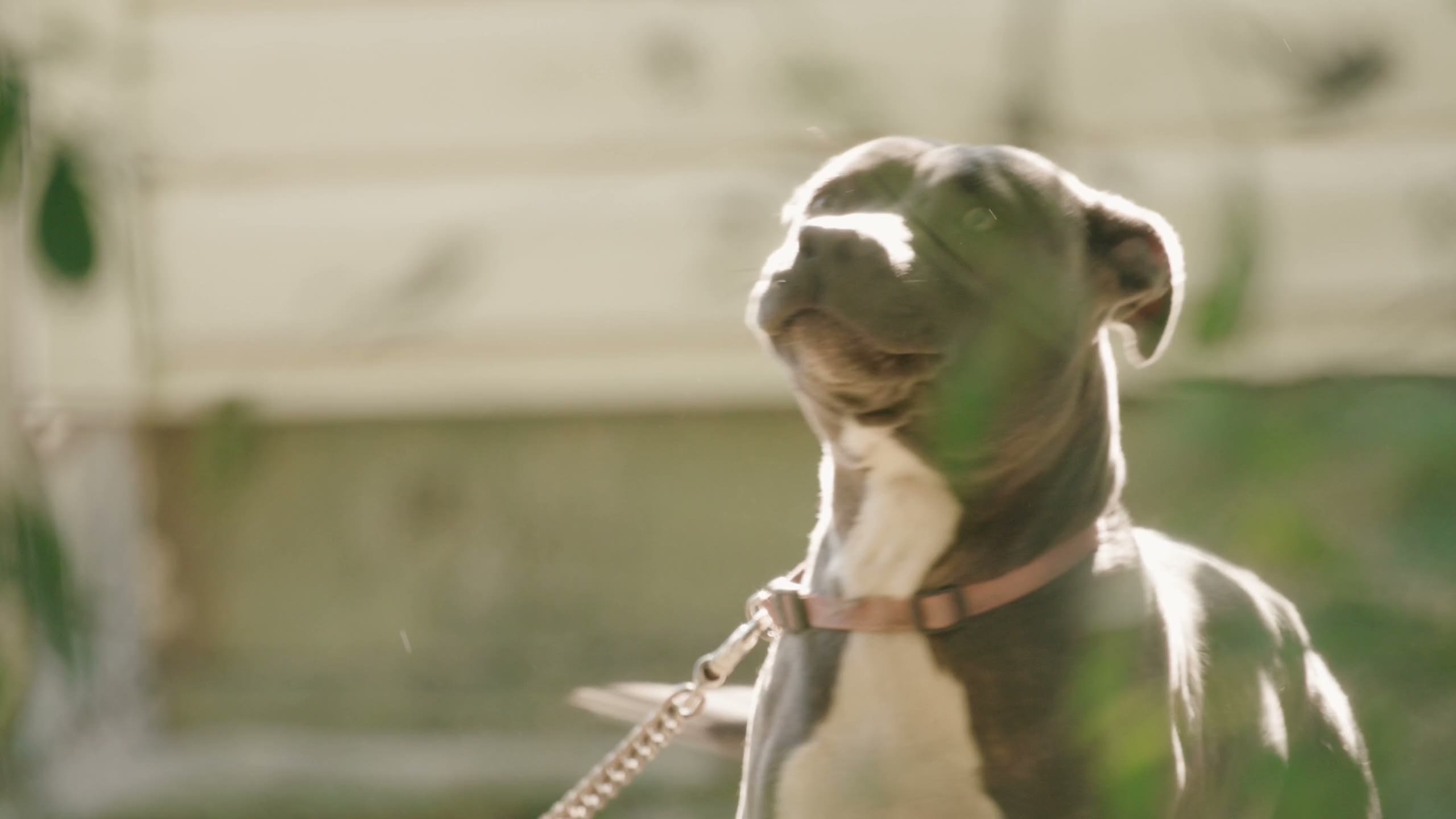
If you have ever looked into your dog’s eyes and wondered what God thinks of them, you are asking one of the oldest questions there is. Dogs have been beside us longer than any other animal — and the Bible noticed. From Exodus to Revelation, dogs appear in its pages: guarding flocks, walking long roads, lying at gates, and — in the words of Jesus himself — teaching us something about mercy and faith.
This is what Scripture actually says. The verses below are quoted as they are written, and where I am reflecting on a verse rather than quoting it, I will say so. The Bible is honest about dogs — it shows them at their best and, sometimes, as a hard picture. Both are worth hearing.
The first dog in the Bible
The word “dog” first appears in Scripture in Exodus 11:7, on the night of the final plague in Egypt. Moses is telling Pharaoh what God is about to do, and God says:
“But against any of the children of Israel shall not a dog move his tongue, against man or beast: that ye may know how that the Lord doth put a difference between the Egyptians and Israel.” — Exodus 11:7
Picture that night: a whole land in terror, and not even a dog would bark against God’s people. The first dog in the Bible appears as a sign of God’s protection — even the animals were kept still, so that Israel would know they were His.
It is the first mention in every major translation — the King James Version, the World English Bible, Young’s Literal Translation, and the rest all place the first “dog” here. (One translation, Darby’s, has “dog-flies” earlier in Exodus 8:21, but those are flies, not dogs.) The word goes on to appear dozens of times, from Exodus all the way to Revelation 22:15.
What God said about dogs
God’s words about dogs are, above all, words of care. In the law He gave to Israel, the dogs were provided for:
“And ye shall be holy men unto me: neither shall ye eat any flesh that is torn of beasts in the field; ye shall cast it to the dogs.” — Exodus 22:31
The scraps from the table went to the dogs. They were part of the household’s care, not forgotten by it. And the Psalms widen that care to the whole of creation:
“O Lord, thou preservest man and beast.” — Psalm 36:6
His preserving care does not stop at humanity. It covers the animals too. Proverbs makes kindness to animals a mark of a good life:
“A righteous man regardeth the life of his beast: but the tender mercies of the wicked are cruel.” — Proverbs 12:10
And Ecclesiastes gives us one of the tenderest lines in the whole Bible about a dog:
“For to him that is joined to all the living there is hope: for a living dog is better than a dead lion.” — Ecclesiastes 9:4
A living dog is better than a dead lion. God values a living, loyal heart over power and pride — and in that verse, the dog stands for the living heart itself.
One more verse belongs here, as a reflection rather than a quotation about dogs. At the very beginning of the story, God says, “It is not good that the man should be alone” (Genesis 2:18). That verse is about human companionship, not about dogs. But it opens a door worth walking through: God saw loneliness as a problem from the very beginning — and through the centuries, dogs have been one of His quiet answers to it.
The dogs who worked beside us
Dogs in the Bible are not pets in the modern sense. They are workers, travellers, and companions — woven into daily life. In Job’s day, they guarded the flocks:
“But now they that are younger than I have me in derision, whose fathers I would have disdained to have set with the dogs of my flock.” — Job 30:1
A shepherd’s dogs were part of the work, trusted with the sheep. And in the book of Tobit, a little dog walks the whole long journey beside Tobias — out to a distant land, and all the way home again (Tobit 6:2; 11:4). Tobit is not in the Protestant canon — it appears in Catholic and Orthodox Bibles — but it is the one place in Scripture where a dog is simply a travelling companion, and it is a lovely one.
The Bible even names a breed. Proverbs lists the things that “go well” — that are comely in their going — and among the lion, the goat, and the king, there is this:
“A greyhound; an he goat also; and a king, against whom there is no rising up.” — Proverbs 30:31
A dog, praised for its bearing, in the company of lions and kings. It is the only breed named anywhere in the Bible.
Outside the pages of Scripture, the story is the same. Dogs were the first animal humans ever domesticated — at least 15,000 years ago, and genetic evidence suggests the partnership may go back 20,000 to 40,000 years. They came before sheep, goats, cattle, and horses. The oldest undisputed evidence of the bond is a dog buried beside two people in Bonn-Oberkassel, Germany, about 14,200 years ago — a dog laid to rest with the humans it loved. Herding, guarding, hunting, guiding, comforting, serving — and, through all of it, simply staying.

What Jesus said about dogs
Jesus mentions dogs three times in the Gospels, and every time the dogs are on the side of mercy.
The first is the story of the Canaanite woman, a mother begging for her daughter’s healing. Jesus says to her:
“It is not meet to take the children’s bread, and to cast it to dogs.” — Matthew 15:26
And she answers him:
“Truth, Lord: yet the dogs eat of the crumbs which fall from their masters’ table.” — Matthew 15:27
Then Jesus praises her — “O woman, great is thy faith” — and her daughter is healed that very hour (Matthew 15:28). The dogs at the table were not turned away. Mercy reached further than anyone expected, and it was a mother’s faith, answered in the language of dogs at the table, that Jesus honored.
The second is the parable of the rich man and Lazarus. A beggar lies at a rich man’s gate, covered in sores, hoping for crumbs:
“And there was a certain beggar named Lazarus, which was laid at his gate, full of sores, and desiring to be fed with the crumbs which fell from the rich man’s table: moreover the dogs came and licked his sores.” — Luke 16:20–21
The rich man feasted every day and passed him by. The dogs stayed. In Jesus’s story, the only tenderness Lazarus received came from them.
The third is a harder one, and honesty asks that we include it. In the Sermon on the Mount, Jesus says:
“Give not that which is holy unto the dogs, neither cast ye your pearls before swine, lest they trample them under their feet, and turn again and rend you.” — Matthew 7:6
Here Jesus borrows the image of the street dogs of his day as a figure — a warning about guarding sacred things from those who would trample them. It is not a statement about dogs themselves. But it is one of his sayings, and a complete account includes it.
Look at the whole picture, though, and the pattern holds: Jesus never speaks against dogs. In his stories, they are the ones who stay, who comfort, who belong at the table.
Where do dogs go when they pass?
This is the question almost every grieving dog lover asks, and honesty matters more than comfort here. The Bible gives no direct statement that dogs go to heaven, and Jesus never says directly where animals go after death. I will not invent one.
What Scripture does give us is a set of passages people have turned to for hope for centuries — and hope, held gently, is a real thing.
Ecclesiastes asks the question out loud, and leaves it open:
“For that which befalleth the sons of men befalleth beasts; even one thing befalleth them: as the one dieth, so dieth the other; yea, they have all one breath… All go unto one place; all are of the dust, and all turn to dust again. Who knoweth the spirit of man that goeth upward, and the spirit of the beast that goeth downward to the earth?” — Ecclesiastes 3:19–21
Read that last line carefully: it is phrased as a question, not an answer. “Who knoweth?” The writer sits inside the mystery with us. We share one breath with the animals, and one dust — and where the spirit goes is left in God’s hands, not ours.
Then there is the care. “O Lord, thou preservest man and beast” (Psalm 36:6) — His care does not stop at humanity. And there is the promise. In Isaiah’s vision of God’s peace, the animals are there — not as an afterthought, but as part of the peace itself:
“The wolf also shall dwell with the lamb, and the leopard shall lie down with the kid; and the calf and the young lion and the fatling together; and a little child shall lead them… They shall not hurt nor destroy in all my holy mountain: for the earth shall be full of the knowledge of the Lord, as the waters cover the sea.” — Isaiah 11:6, 9
Paul writes that all creation — not just people — is waiting to be set free:
“For the earnest expectation of the creature waiteth for the manifestation of the sons of God… Because the creature itself also shall be delivered from the bondage of corruption into the glorious liberty of the children of God. For we know that the whole creation groaneth and travaileth in pain together until now.” — Romans 8:19, 21–22
Your dog is part of that creation. And the Bible’s last word on the matter is a world made new:
“And I saw a new heaven and a new earth… And God shall wipe away all tears from their eyes; and there shall be no more death, neither sorrow, nor crying, neither shall there be any more pain: for the former things are passed away.” — Revelation 21:1, 4
We cannot say with certainty what we long to hear. But we can say this: the God who noticed the dogs in Egypt, who provided for them in His law, who preserves man and beast alike, and who promised a new creation where nothing hurts anymore — that God has never forgotten a single creature He made. If you are grieving a dog today, hold onto that. Hope is not the same as knowing. But it is enough to rest on.
They have been with us all along
From the first bark that never came in Egypt, to the sheepdogs of Job, to the little dog on the road with Tobias, to the dogs at Lazarus’s gate — dogs have been in the story the whole time. They guarded, they walked, they comforted, they stayed. And they still do.
Perhaps that is what God loved most about them: not their strength, though they are strong, and not their beauty, though they are beautiful — but their faithfulness. A dog does not love you for what you can give. A dog simply stays. And in a world where so much leaves, staying is the holiest thing there is.
Tell us about your dog
If this spoke to you, we would love to hear about the dog who shares — or shared — your life. Write to us at [email protected] with your dog’s name and breed, and what they have meant to you. We read every one, and the best stories find their way into our videos.
If you would like to hear from them more clearly
For those whose dog has crossed the Rainbow Bridge, a reading can be a comfort — a chance to hear what they would say about their life with you, and about how they are now.
That is the work we do at PetInsight. In a reading, we listen for your pet and share what comes through, in plain, gentle words, by email. You choose your reading on our website, then send your pet’s photo — or simply their name and your memories.
See the readings at petinsight.online
Readings start with a simple One Question option, and full Photo, Video, and Full Story readings are there when you want to go deeper.
Verses in this post
Exodus 11:7 · Exodus 22:31 · Psalm 36:6 · Proverbs 12:10 · Ecclesiastes 9:4 · Genesis 2:18 · Job 30:1 · Tobit 6:2; 11:4 · Proverbs 30:29–31 · Matthew 15:26–28 · Luke 16:20–21 · Matthew 7:6 · Ecclesiastes 3:19–21 · Isaiah 11:6–9 · Romans 8:19–22 · Revelation 21:1–4
— Sage Hart, PetInsight
All Scripture quotations are from the King James Version. Tobit is quoted from the King James Apocrypha; it appears in Catholic and Orthodox Bibles but not in the Protestant canon. PetInsight readings are offered for comfort and reflection. Every person’s experience of grief is different, and no reading can be guaranteed. If grief is feeling too heavy to carry, please reach out to a trusted friend, counselor, or support line in your area — you do not have to carry it alone.
← Back to PetInsight